This guide is part of the “Advanced Crypto Trading Strategies” series.
By now, everyone knows the main feature of crypto is extreme volatility, which is why it’s so lucrative. Prices can rally 30% in a single day, only to come back down hours later. But predicting where Bitcoin (BTC), Ethereum (ETH), or any of the altcoins might head to next often feels impossible. There is one trick, some people seem to consistently catch the perfect entry point and exit right before a massive pullback. What’s their secret?
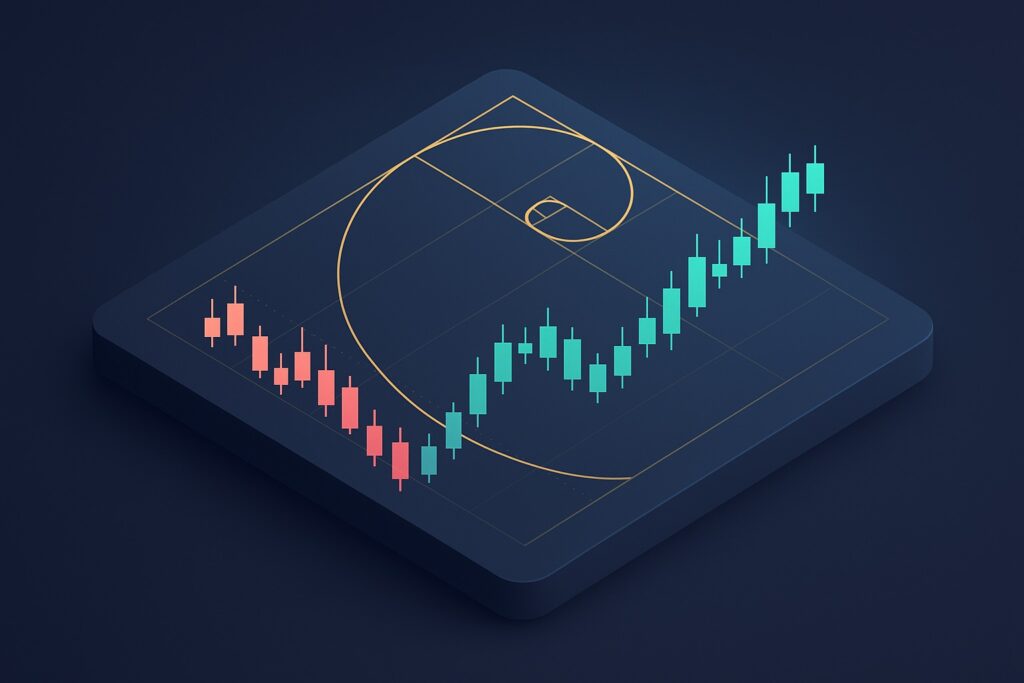
Today, we are going to dive into a form of technical analysis (TA). This method of analysis uses historical price data and mathematical indicators to find patterns within the chaos. And among all TA tools, few have shown themselves to be better than the Fibonacci levels.
Fibonacci levels are used to identify where the market might find support, resistance, and even reverse direction entirely. They work across all timeframes and all assets, from Bitcoin to Forex and stocks, giving traders a way to understand the markets.
In this guide, we’ll go over what Fibonacci levels are, how to draw them correctly on a chart, and explain the most effective ways to use them to improve your trading. Many traders have found their edge in using Fib levels, and after today, you will be able to do it too.
Table of Contents
What Are Fibonacci Levels?
Fibonacci levels are horizontal lines on a chart that show where prices are likely to change. These levels are based on a series of numbers that were first used in Western math in the early 1200s.
Today, Fibonacci levels are specific ratios that traders use to find Fibonacci levels. These ratios can help you figure out where price changes might stop, reverse, or keep going.
The Golden Ratio and the Fibonacci Sequence
The Fib sequence is a set of numbers where each number is the sum of the two numbers before it. The first numbers are 0, 1, 1, 2, 3, 5, 8, 13, 21, and 34, and the pattern goes on forever. As the sequence goes on, the ratio between the numbers gets closer and closer to 1.618, which is also called the Golden Ratio (φ).
The Fibonacci sequence and its ratios can be found in nature and in people. The pattern can be seen in the spirals of shells, hurricanes, the way trees branch out, the way leaves are arranged along their stems, and even the proportions of the human body.
The main idea in trading is that markets don’t move in straight lines; they move in waves. Prices often go back a little bit after a big move up or down before going in the same direction again.
Fibonacci retracement levels, such as 23.6%, 38.2%, 50%, 61.8%, and 78.6%, show us where that pullback might stop. For example, during an uptrend, traders will often look to buy near the 61.8% level expecting the price to stop there and resume the global trend.
Why Do Fibonacci Levels Work in Trading?
Fibonacci levels work primarily because of collective psychology and the effect of a self-fulfilling prophecy. When millions of traders and trading bots monitor the same ratios (like 61.8%), they tend to react at those levels.
Basically, Fibonacci levels are less about precise math and more about human behavior, it’s a way of predicting where the crowd might react next.
The Key Fibonacci Ratios
When applying Fibonacci levels to your crypto charts, you’ll commonly see two categories of ratios: retracement and extension levels.
Retracement Levels are used to find pullbacks within a trend: 23.6%, 38.2%, 50%, 61.8% and 78.6%.
The golden pocket sits between 61.8% and 78.6% which is a favorite level among professional traders. This is where high probability entries are located after a pullback.
Extension Levels are used to forecast price targets that go beyond the current price range. Like figuring out how much Bitcoin will be in the future after new all time highs: 127.2%, 161.8% and 261.8%.
Extension levels are most important when an asset enters the price discovery phase. That’s when it breaks past all previous highs or lows and the market searches for a new fair value.
How to Use the Main Fibonacci Tools
Each tool serves a specific purpose in your trading strategy.
Fibonacci Retracement
The Fibonacci retracement drawing tool helps identify potential support levels during a pullback in an ongoing uptrend. These levels show where traders might buy the dip before the trend resumes.
In simple terms, after a strong rally, markets rarely move straight up. They pause, retrace part of the move, and then continue higher. Fibonacci retracement helps you target these areas to look for entries and assist in stop-loss placement.
Fibonacci Extension
Once you’re in a position, you need to know where to take your profits. That’s where Fibonacci extensions prove their worth.
The Fib extension tool shows you possible price targets beyond the recent swing high or swing low. These levels act as natural zones where traders may take their profits or where the trend could slow down temporarily.
You can use these extensions to set take-profit orders in advance, fixing your gains at key Fibonacci levels while minimizing emotional decision making.
How to Draw Fibonacci Levels on a Chart
One of the biggest mistakes traders make with Fibonacci indicators is drawing them incorrectly. The placement of the swing points will directly affect your entry point, stop-loss, and profit targets. Next, we will walk you step-by-step on how to draw them out on platforms like TradingView, Binance, and Bybit.
Setting Up Your Chart
Most charting platforms have Fibonacci tools available by default. To put it on your graph in TradingView, first choose your timeframe (4-hour, 1-day, or 1-week charts are usually best), then zoom out to see the most recent swing highs and lows clearly.
Fig. 1 – Identifying Swing Highs and Lows In An Uptrend – 1D Chart
To add the indicator click the “Fib Retracement” tool from the left-hand menu.
How to Draw a Fibonacci Retracement
In an Uptrend:
- Identify the swing low (the lowest start of the move).
- Identify the swing high (the peak of the move).
- After you click the indicator, press once on the swing low and then press once on the swing high.
Fig. 2 – Choosing the Fibonacci Retracement and Placing it on Swing Highs and Lows – Uptrend
The retracement levels (23.6%, 38.2%, 50%, 61.8%, 78.6%) will automatically appear. These show potential support levels for when the price pulls back with 61.8% being the strongest. If price breaks below 78.6% the uptrend is considered void and a further decline is very likely.
In a Downtrend:
- Identify the swing high (start of the move).
- Identify the swing low (end of the move).
- After choosing the indicator, click once starting from the swing high and click again on the swing low.
Fig. 3 – Choosing the Fibonacci Retracement and Placing on Swing Highs and Lows in a Bear Trend
Now the retracement levels act as potential resistance zones, showing you where a short-lived rally (a dead cat bounce) may finish before the downtrend resumes.
How to Draw a Fibonacci Extension
Remember the Fib extension forecasts future price targets based on the strength of a previous move. You can use this tool to mark both downtrends and uptrends by following these steps:
- Choose the Trend-Based Fib Extension.
- Click the start of the move.
- Click the end of the move .
- Click the end of the retracement (the pullback).
Fig. 4 – How to Choose the Fibonacci Extension and Put It on the Graph When the Market Is Going Down
After you plot it, the tool will show you the 127.2%, 161.8%, and 261.8% levels. You can use these to set your take-profit orders or see where you might run into trouble.
Fibonacci Levels in Real Trading Strategies
It’s time to see how Fibonacci retracements and extensions fit into your trading strategies now that you know how they work. Here are four tried-and-true strategies that use Fibonacci tools, market psychology, and technical indicators to help you trade with a higher chance of success.
Strategy 1: The Golden Pocket
The Golden Pocket is between the 61.8% and 78.6% levels, as was said above. During a pullback, this is one of the safest places to enter a trade. It is a place where markets often go to before returning to the main trend.
This is how to use it when the market is going up:
- Wait for the price to go back down to the 61.8% area if it is a bullish trend.
- You can look for confirmation in the form of a bullish candle pattern, rising volume, or a bounce off a trendline you drew.
- When the price starts to go back up, away from that area, enter the trade.
This area is a strong support level because big traders and algorithms tend to place buy orders there.
Strategy 2: Confluence Trading
A Fibonacci level is good on its own, but it becomes great when other indicators and chart features back it up. Confluence is the name for this idea. It means that different types of analysis agree on the same trade signal.
Some strong examples of confluence in a bull market are:
- A 50% retracement level on top of a 200-day moving average.
- A 61.8% level that is on top of a previous support zone.
- A zone around 78.6% that fits with a bullish chart pattern, such as an engulfing candlestick pattern.
When these signals overlap or come together, you should think of the area as a stronger support or resistance level, which will make you more confident in your trades.
Strategy 3: Use Extensions for Take-Profit Orders
Using Fibonacci extension levels to set take-profit orders (TP) helps you trade objectively and plan your exits ahead of time. Instead of guessing where to sell, you can use math to set price targets that will help you make money.
One way to do this:
- TP1: 127.2% level (take partial profit to reduce risk)
- TP2: 161.8% level (this is your main profit zone)
- TP3: 261.8% level (extended price target for price discovery)
This method lets you protect your profits while still having some exposure in case the trend keeps going.
Strategy 4: Using Fibonacci for Stop-Loss Placement
Risk management is what makes a professional trader stand out from an amateur. Using Fibonacci levels to set stop-loss orders is one of the best things you can do. Put your stop-loss just below the 78.6% level if you enter your trade at the 61.8% retracement.
If price goes past the 78.6% level it invalidates your trade, so keeping a stop loss there limits your downside, while still giving your position enough room to breathe.
For sell trades during a downtrend, place stops just above the 78.6% retracement instead.
Common Mistakes to Avoid with Fibonacci
While Fibonacci tools certainly are useful, using them incorrectly can lead to poor decision making. Here are the most common mistakes you should avoid.
Relying 100% on Fibonacci
Fibonacci levels are analytical tools. They highlight the areas where price reactions are statistically more likely, but not guaranteed. The most effective traders use them together with other forms of technical analysis such as trading volume, trendlines, moving averages, and momentum indicators like RSI. When several of these tools align, the setup will carry more weight and have higher probability.
Drawing on the Wrong Swing Points
Incorrectly placing Fibonacci anchor points can distort your entire analysis. The retracement or extension must be drawn from clear, significant swing highs and lows that mark true turning points in price action. Avoid using small wicks or random fluctuations that occur within short timeframes, as they often create misleading signals.
Using Low Timeframes
Applying Fibonacci levels on low timeframes such as 1-minute or 5-minute charts tends to have unreliable results. Crypto’s volatility creates too much noise that can break through levels without any meaningful traction. For better accuracy and clarity, use higher timeframes like the daily and weekly chart.
Ignoring Extreme Volatility
Fibonacci levels can lose relevance during periods of sudden volatility such as breaking news and unexpected global events. Prices may move directly through key levels without stopping. To protect your capital, always use a stop-loss, regardless of how confident you are in your analysis. Solid risk management remains the foundation of every successful trading endevor.
Adding Fibonacci Levels to Your Trading
Fibonacci levels are one of the simplest yet most powerful additions to your crypto trading. They help you find support levels during pullbacks, estimate price targets during bull markets, and set structured take-profit and stop-loss levels at all times. And all of this is based on natural market rhythms.
When used correctly, Fibonacci can give you an edge in both bull and bear markets, helping you navigate the volatility of cryptocurrency. Whether you’re swing trading Bitcoin, scalping Ethereum, or trading new altcoins, mastering Fibonacci levels can help you enter at better prices, secure larger profits, and trade with more confidence.
If you want to master timing your entries with Fibonacci levels, keep learning with vTrader. This platform gives you the tools, education, and real market insights you need to build consistent gains.
Join the vTrader community today and trade with precision.

Steve Gregory is a lawyer in the United States who specializes in licensing for cryptocurrency companies and products. Steve began his career as an attorney in 2015 but made the switch to working in cryptocurrency full time shortly after joining the original team at Gemini Trust Company, an early cryptocurrency exchange based in New York City. Steve then joined CEX.io and was able to launch their regulated US-based cryptocurrency. Steve then went on to become the CEO at currency.com when he ran for four years and was able to lead currency.com to being fully acquired in 2025.